SUSHI
I get it! Not all Sushi is uncooked fish. The part that is … not appealing! The whole idea of eating uncooked meats (in any amount) turns my stomach. If I was starving in the wilderness I’d eat what I could find. But I would never go to a restaurant and PAY to live on survival food. Also, I plan to set a cook fire in the wilderness if possible.
The excuse some give is that the raw fish they eat has been FROZEN and that kills the parasites. OK. Except that I know about parasites. There are four forms of parasitic infestation in uncooked meat. There are the adult parasites themselves, the larval stage, pupal stage, and eggs. Freezing meat kills MOST of the adult parasites. Wow, that’s nice, but what does freezing do to larvae, pupae, and eggs? Larvae also often die. Not all parasite pupae die. Further, it is rare for eggs to be destroyed by freezing. *To kill all stages the temperature must be at or below -4 degrees F for at least 7 days.* If the fish was frozen at a colder temperature the parasites would die sooner. If the fish wasn’t cold enough long enough … some parasites may survive. However, freezing doesn’t kill bacteria. It doesn’t eliminate toxins caused by mishandled fish (poor sanitation). It also doesn’t solve the problem of “spoiled” fish. Neither your home freezer nor most restaurant walk-in freezers are likely to reach the required -4 degrees F. The big deal is that even if that restaurant freezer CAN, did they store the fish in the freezer the full 7 days?
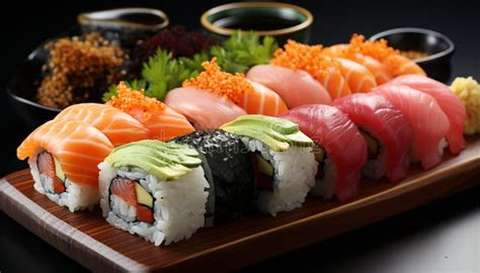
Was your sushi actually frozen before it landed on your plate? (How would you know?) How long was it frozen and at what temperature? I’d want a pamphlet from the restaurant. I’d want to meet the health department official who inspected the premises. (By the way I have met and spoken to many health inspectors. They are generally good people. I will say that one restaurateur to whom I spoke always left something for his inspector to “find” like an empty metal condiment container on the floor somewhere. He said otherwise the inspector would look UNTIL he or she found “something.”) Here’s the kicker: Health inspectors usually only require restaurant walk-in freezers to maintain 0 degrees F (not -4 degrees). Those 4 degrees are HUGE when destroying parasites in raw meat, but not important when the plan is to cook the meat.
Insects that inhabit houses and pantries are much more susceptible to cold (except bed bugs, ants, crickets, etc.). Bed bugs are quite susceptible to heat above 120 degrees F. but adults and eggs easily survive deep freeze temperatures. Flour beetles die in freezers, but their larvae slow their activity, and eggs easily survive.
However, when talking about parasites that live in cold ocean waters … they are automatically cold resistant. Heat is what kills all stages of an ocean parasite. So, if you really want food safety cook the fish.
Lets focus on RISKS associated with raw fish which are absent in cooked fish. Raw fish, a common ingredient in sushi, can harbor harmful pathogens that can cause foodborne illnesses.
Sushi is a Japanese cuisine that traditionally incorporates raw fish, rice, and various other ingredients. While sushi is delicious and enjoyed by many, it carries a higher risk of food poisoning compared to cooked foods. This is primarily due to the raw nature of the fish, which can be contaminated with bacteria, parasites, or viruses that lurk in the seafood. These fish, if not handled or prepared properly, can harbor pathogens like Salmonella, Vibrio, or parasites like Anisakis. These can cause gastrointestinal symptoms like nausea, vomiting, abdominal pain, and diarrhea. In some cases, severe food poisoning may require medical attention and can have long-term health effects.
Raw oysters are so risky that California would have banned them if they were a fake sugar. Four people in Florida have died from a flesh-eating bacteria linked to them. It is recommended that pregnant women and individuals with weakened immune systems avoid raw oysters, raw clams, and certain types of raw fish, such as tuna and mackerel. These items may have a higher likelihood of harboring bacteria or parasites that can cause foodborne illness.
As a pest control operator in a major city I spent time in many restaurant kitchens. Aside from the common problem of cockroaches, many kitchens made me decide to never eat there. The cleanliness/sanitation practices were absolutely horrific at some. Others stored their onions and potatoes in the basement where mice and rats ran at night. You really have to know whether the restaurant is reputable! That being said, more than one restaurant had insect/rodent problems when I began servicing them. The company I worked for SOLVED those problems quickly. So, after years of consistent control I had no problem sharing a meal there with my wife.
So, believe the health department reports! If they close a restaurant or give it a low score … that place would not be in the top tier of OK places. Our local city publishes restaurant scores twice yearly. Buy that paper and save it in your restaurant coupon drawer. You should also read consumer reviews. Every restaurant gets a few nasty reviews (over things like getting the order wrong or a server’s bad temper), but the majority of the most recent 30-50 should be 4 or 5 star, and look for statements about cleanliness. By the way, I generally agree that customer restroom cleanliness can be an indicator of kitchen cleanliness, but not always. (Bathrooms aren’t as important as food safety so restaurant owners don’t always give them top priority.)
If you must eat meat tartare, have your local ER on speed dial.

Copyright 2026 Donald Whelpley
[PLEASE NOTE that Don is always open to discussing the thoughts and opinions he shares here and welcomes comments as shared in the comment section. He doesn’t use other social media platforms and won’t see whatever you’d like to share with him if you post it elsewhere.
ALSO, Don is always open to offer his thoughts on various topics. If you have a specific request, you can let him know in a comment; he reads – and replies to – them all. ~ Sherry]

See more GUEST POSTS from Don
I HAVE to comment on this! Earlier today, before I looked at my email or your guest posts, I had written on a federated instance to which I belong, “And hey, I found someone I will enjoy following here, I’m a big fan of travel documentaries so I can visit the world from my home (last night I was in Andorra). But I also love following SoloSoloTravel on YouTube, in part because of his humor and descriptions, but in even larger part because he is a foodie. Though I know nothing of Japanese food it all looks delicious so I was delighted to come across 井之頭五郎 @goro (I think that’s right) and subscribe, and I’m already hungry. I’m becoming obsessed with Japanese food culture, and just yesterday learned of a Japanese restaurant not too far away from where I live. It’s probably quite Americanized but still…”
And then, because I am saving the other post for Sunday, I thought I’d post whatever you’d sent me today. And golly…what a coincidence! But I just want to say that I haven’t eaten raw fish or sushi and it doesn’t appeal to me. It’s all the rice and noodles and (cooked) meat and vegetables and sauce that have my attention. Just quite a coincidence I think.
I guess not being in a culture that grew up on raw fish, I just prefer mine cooked is all.
@owly
Growing up with parents who knew people who had endured trichinosis, our pork was always cooked to “as tough as it could be.” Our beef, too. Chicken and turkey was dry as a bone. My grandfather never ate an apple in the dark either, BTW.
So, at my wedding my father in law supplied “just north of rare” steak at the family reception. One brother and his wife took their portions home and “cooked” them.
The one thing everyone should know is that even in 2025 it is still possible to be infected through undercooked foods.
Growing up I always thought I hated pork because it was easier to chew up shoes than the pork chops that reached our table. I recall my mom preaching about trichinosis, and she always said that was the only way my dad would eat it. There’s no doubt that undercooked foods are an issue still today (and I’m not convinced even moreso)! After eating a medium-rare steak at a steak house in Traverse City I thought Casey (about 10 years old at the time) was going to have to drive home. Then I was in the hospital for 4 days. NASTY painful days, and I learned my lesson for sure!