DOOM CUSTOMERS +
Research has shown that customers who bought a product which failed and which was eventually removed from the market are much more likely to buy the NEXT doomed product.
Who are these customers of “doom?”
They are early adopters. They see something new and immediately buy it.
They go for cheap. They like products which are inexpensive.
They go all in … buying the new product until the bitter end.
They are more likely to be early adopters of the NEXT product failure.
Unfortunately, businesses include the excitement of all customers (including the doomers) in their forecasting data when their new product comes on the market. Inevitably, as a result, the forecasted outcome is not as strong as expected.
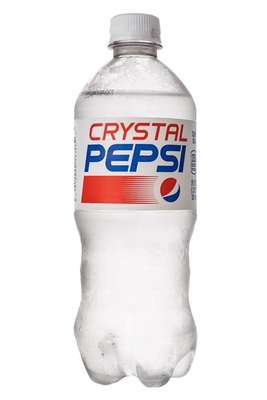
Some companies have incorporated surveys to weed out these “doomers.” This helps those businesses to create much more accurate forecasts. Crystal Pepsi would have been taken off market far sooner if Pepsi had used one of these newer surveys. Instead, it lingered (and lost lots of money for Pepsi).
So, here’s how to know if you are likely a “Doomer.” Have you latched onto some product which after less than a year was removed from the market? You probably are a “Doomer.” If it has happened twice you definitely are.
Another thing companies do to weed out “Doomers” is to up-price the new product. If regular Oreos are $3.49 then “Spaghetti Oreos” will be $3.79. If it sells well soon after hitting the market it is more likely that doomers didn’t buy it (they like cheap). If it is still selling well in a month, it is a sign that customers really do like the product enough to pay more.
Gotta say it … I am certain I am not a “Doomer.” I rarely adopt a new product. I don’t think I would be tempted to buy “Spaghetti Oreos” at any price.
Finally, Doomers tend to share the same zip codes. Find one, find many. Companies have figured this out. If sales in THOSE stores are strong, it bodes badly for the product. Did I mention that it is claimed Doomers tend to vote for candidates who fail, too. (I don’t really trust that pronouncement, since usually elections are pretty close which would mean that almost half of voters are “Doomers.” That doesn’t sit well, does it?)

DEMENTIA
Read this story in the Washington Post: “15 Science-Based Ways To Reduce Your Risk of Dementia”
I’m calling it mostly fake. In fact, the author herself (whom I’m not bothering to name) calls it fake: “There is no cure, and it can’t be prevented. But you can reduce your risk.” If it can’t be prevented, exactly how could you reduce your risk? So, we have to define “risk.”
Standard English definition is “the possibility of suffering harm or loss.” If true, then this article’s suggestion that the risk of dementia can be “reduced” is fake.
However there are other definitions. A business definition states: “A probability or threat of damage, injury, loss, or any other negative occurrence that is caused by external or internal vulnerabilities, and that may be avoided through preemptive action.” Long. This could make sense for this article, except the author clearly states that it CAN’T be prevented (avoided). Still fake.
So, what does the author MEAN when she claims there are ways to reduce your risk? Clearly she means something altogether different from what she says.
I read this and several other similar articles to get the overview of what they MEAN. This is it: “YOU MAY BE ABLE TO -DELAY- DEMENTIA.”
You can’t avoid it, but you might be able to delay it. This how the medical profession deals with almost every disease. They say you can reduce your risk of dying from heart attack if you do such-and-such. What they mean is that you might be able to delay dying if you do such-and-such. However, the reality is that no matter what you do your risk of dying is still 100%. Instead of dying at age 59 you might be able to change some behaviors and live 1.7 more years. Clearly, medical “risk” is merely a way to delay the inevitable.
The problem is that there is no study referenced to show that dementias were delayed by these changes in lifestyle. Will smoking cessation actually delay dementia? No proof of that, although there is plenty of proof that it will otherwise improve one’s general health.
They also tout plant-based diets, getting vaccinated, protecting your hearing, etc. Again, no scientific proof that any of these have delayed the onset of dementias. So, I call the entire genre of “ways to prevent dementia” a false path.
Do I think their ideas about smoking cessation are bad? No. You should stop smoking. However, I did not see a single scientific study referenced showing a delay the onset of dementia. Believe what the author said, “…[dementia] can’t be prevented…” Anecdotes are not studies. So, HOW are these “science-based ways to reduce risk?”
Lies, lies, and dirty lies.
This isn’t the only article that misrepresents the value of lifestyle behaviors to overcome the RISK of dementia. Sorry, but avoiding “pesticides” in your food is impossible, You can be sure of that only if you grow it yourself. Studies have shown that almost every food product found at the store (even organic) has some pesticide residue. How much can you avoid dirty air? Even electric cars, pollute. Want proof? Guess where the brake pad dust goes. (That’s right, into the air you breathe and the water you drink…)
I’m calling you out on this one Washington Post!
Copyright 2025 Donald Whelpley
[PLEASE NOTE that Don is always open to discussing the thoughts and opinions he shares here and welcomes comments as shared in the comment section. He doesn’t use other social media platforms and won’t see whatever you’d like to share with him if you post it elsewhere.
ALSO, Don is always open to offer his thoughts on various topics. If you have a specific request, you can let him know in a comment; he reads – and replies to – them all. ~ Sherry]

See more GUEST POSTS from Don!
Comments