WITHOUT PBS
We’ve survived without it before. We surely can again.
Growing up a bit ago in the foothills of mid-Pennsylvania, we never could get a clear NET Television signal on UHF. In fact, only rarely could we even get a show like “Sheri Lewis and Lambchop,” or Bob Keeshan’s “Captain Kangaroo”…. For some reason “Romper Room” came in clearly for about 5 minutes before it fuzzed out most mornings. Yet “Days of Our Lives” on VHF came in just fine for mom in the afternoons. [I dare say that most born in the last 25 years don’t know what UHF or VHF stand for.] Back then it took nearly a minute for the tube to warm up, and to change the channel one had to stand in front of the tube and turn a dial. (The static electricity would tug on the hairs of your arm.) There was a fine-tune dial behind the numbered one because not every TV station was “true.”
Our young entertainment came from re-runs of “Flipper,” “Lassie,” maybe “Daniel Boone” starring Fess Parker or “My Three Sons,” and an occasional Saturday morning cartoon, like “The Adventures of Rocky and Bullwinkle.” Of course, we were at the mercy of a thing called “rabbit ears.” Unlike cable or streaming services, those antenna had to pick the signals “over the air” (OTA). When the channel wouldn’t come in, one was left with re-reading a book.
So, entering first grade without PBS and without kindergarten, I failed miserably. My life was ruined forever, with no hope of success!!! (Sarcasm) Actually, I think I did fairly well.
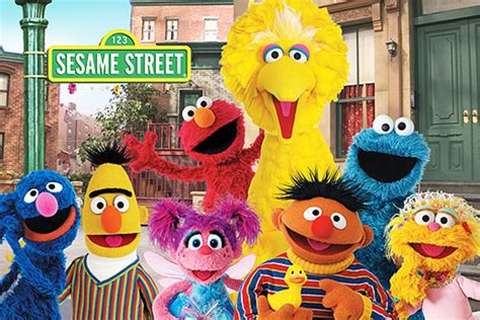
Without the 100 pound, 15” black and white TV repeatedly pounding 2 minute messages into my brain like “Sesame Street” does, I was capable of spending 20 or 30 minutes learning every lesson in school. In fact, we all did. No one fuzzed out. We didn’t fall behind or fall into the cracks. School systems back then held you back if you could not read, write, or do math at a third grade level by the end of third grade. None of my classmates were held back. I know a few over the years had to return to third grade, but they learned that learning had its advantages and thereby graduated to 4th, 5th, and beyond by KNOWING STUFF. If they later dropped out at 10th grade they still could read, write and do simple math. Now … now nearly 20% of 19 year olds can’t do those 3 things even if they “graduated.” (That’s a fact, Jack!) I don’t think PBS has helped much.
My older siblings had it even worse. My oldest brother had to survive until age 7 without any TV at all. He learned how to read, write and do math without it and all he could do with his young life was enlist in the Navy. (Isn’t that awful?) But later he studied to be an electrician anyway and did quite well in life.
My parents, growing up, only had radio and my mom learned Latin grammar in grade school. My dad, on the other hand waited until he had served in the Pacific by jumping out of planes, had married and raised a family, before he went back to school to get his GED. He knew stuff his teachers didn’t, but he never got to watch PBS as a child. As an adult he taught himself how to do electrical circuitry and how to build whatever he wanted with a sabre saw and a power drill. Alas, he never learned to count with “The Count.” but he was a whiz at math anyway.
“Soft!” That’s what he would say about young adult parents who starting in the fall of 1970 wouldn’t know what to do if they couldn’t plop their youngsters down in front of “Sesame Street.” (Why are they still making that anyway? Once they had 10 years of programming they could have stopped.)
Our current nearby city has a PBS outlet. They have five (5) OTA channels for a city with a population roughly the same as Lansing, Michigan. One is kids’ cartoons for most of the day including “Dora,” and “Arthur.” One’s too young for even the youngest. The other’s too weird. Neither teach much of anything. I hope “Caillou” isn’t in their lineup!!!!!!!!!! We wouldn’t permit our children to watch that entitled, spoiled brat. I’d rather they watched “The Princess Bride” 50 times rather than that PBS-sponsored septic system called “Caillou.” That program had the leanings of PBS in full view for any parent who had a cast-iron stomach or lack of brains.
Another channel our local PBS has is re-runs of 30-50 year old discussion forums. Who watches those?
Then there’s one which has somewhat interesting content for adults…history, geography, science, and really old movies.
Then there’s the “cooking channel.”
Finally, another children’s channel.
So, the local PBS could drop several channels in order to save some cash on transmitters and employees.
By the way, the city also has another OTA cartoon channel. There are a few OTA “old movie” channels. There’s a Westerns channel. We even have a non-PBS educational channel and a Radar channel. We have almost everything anyone would want without PBS. We would miss Oscar the Grouch who teaches us … I’m a bit unsure what he teaches … that it’s OK to be rude?
Via internet we have free ROKU with hundreds of other channels, and some will play at will. Stop and start when you want. I watch old shows 10 minutes at a time, commercial free.
PBS might have been a need 40 years ago (I don’t think so). It is not really needed now. I can watch any of 10,000 YouTube videos on any electronic device. I can watch my favorite band. I can watch old movies and re-runs (even “Captain Kangaroo”) at will. What does PBS have that isn’t already out there FREE?
Not needed anymore. It fulfilled its function and could disappear … but then I’d miss that Kentucky fishing show (which I haven’t watched in … was it last year?).

Copyright 2025 Donald Whelpley
[PLEASE NOTE that Don is always open to discussing the thoughts and opinions he shares here and welcomes comments as shared in the comment section. He doesn’t use other social media platforms and won’t see whatever you’d like to share with him if you post it elsewhere.
ALSO, Don is always open to offer his thoughts on various topics. If you have a specific request, you can let him know in a comment; he reads – and replies to – them all. ~ Sherry]

See more GUEST POSTS from Don!
Sorry! My editor (ME) missed it: ” VHS” should read “VHF.”
Ever write a bit and feel like something is off?
corrected 🙂
Pbs in its earliest days, the desire keep it around is mostly nostalgia, and its content can be entertaining. (for the kids, and adults.) Authur for example is a type of show that can be engaging of both kids and adults watching it.
It’s not a channel I watched a whole lot of pass age 8, but when I did there’s a lot of nostalgia of programming on that channel. From Arthur, to Dragon tales.
Is it something I would watch 24/7 and forget the rest of the world? No. A lot of these shows also did go over social situations, playing them out and potentially teaching kids how to act in certain types of social situations. Teletubbies in the early 2000s for me was probably one of the more influential shows for me growing up. Teaching me how to count but also being my first introduction to flash games on the internet on pbskids.org.
To an extend, now a days i’d argue that we (media consumers) wouldn’t need PBS as much now as we did then. (when we had less media options) Since the internet makes education much more accessible then before. Pbs to this day is still primarily a tv broadcast tv station. I don’t see anything against them, having a broadcast station, but it shouldn’t be their primary output of content today.
@Levi
I agree with you 100%. Thank you for your comments.
At the time it was introduced it served by filling a gap which program TV could not or would not fill.
When the internet took over everything, circa 1995 (I’d guess) it lost its edge. Like so many things in this world, including buggy whip manufacturing and Montgomery Wards, it has outlived its original mission. What are they doing now? They are showing old movies, outdoors shows, history, interviews, and kids programming. All of those are now easy to find elsewhere.
Like so many things which we remember, they hold a special place in our hearts, but not our wallets or our time.
We shouldn’t be funding it if half the population isn’t watching it. If a lot of people were really watching it, atleast it would be something that’s in the public interest getting funded. I would suspect that the viewership is probably not so high for pbs.
However, they do or did have schools working with PBS to educate students, the only way they could consistently fund that would have to be through tax payers.
If I would had picked the year to drop PBS funding probably would be 2017. Past that point most people would not really need PBS at all. Back in the 2010s, while you did have more access to alternative media options, not everyone had the greatest internet streaming speeds, and if you really wanted to catch something having a tv antenna could come in handy. However, there are plenty of channels you can now, on over the air tv that selffund themselves for the most part.
Once your past the year of 2017, the internet is just so much more accessible, internet speeds are good enough for a smooth stream. At least you would be able to do 360p to around 720p at minimum in most places if your paying the lowest prices you can. Some areas however still might not have the strongest signals, and you might have no other choice but to turn to a tv antenna to get a good amount of your local news and etc.
Agreed.
The biggest problem for PBS is that those who still don’t have internet (or only have satellite internet) live in the wilderness. That is the same place where OTA signals for PBS don’t exist either. Almost all of PBS stations are located in large cities.