UNDERSTANDING “AVERAGE”
When one is trying to succeed in business or sports “average” is a negative. However, if you have always been below average in sports or business, achieving “average” is good!
Now, to the point. Average, by definition, means SOME are less and SOME are more.
I saw this headline: “Surviving the ‘Above-Normal’ Hurricane Season: How Homeowners Can Prepare and Protect Their Homes—and Save Money on Insurance.” It is one of many headlines and stories recently which make a big talk about the possibility that this year’s hurricane season will be greater than the last few. You should not be impressed. If there weren’t above average (higher than normal) years, there would not be such a thing as average (normal) years or below-normal years. Changing the word from “average” to “normal” is meant to give it more impact. It doesn’t. The year could be, after we see everything, below-normal. So, don’t freak out.
So, “average” is merely “average.” If you throw 10 wadded pieces of paper at a wastebasket 4 times and you miss a few each time… 9,4,7,6. What’s your average accuracy? It is 6.5. However, no one can throw half a throw. So, average is often an impossible number.
Whoa! Now I know one reason so many statistics that matter DON’T use “average.” They use something called “median.” In many areas of life median works much better. For example, “average earnings” in the United States may have a number like “$133,333.44.” But “median earnings” might have this number for the same group of people: “$72,242.” That’s the true middle. There are an equal number of people who earned more and less. Whereas “average” or “normal” just gives a percentage of the dollars earned, not the people who earned them. For example, in real life when checking yourself against “average” you are competing with multimillionaires and people living in their cars. So, CNBC reports that the average amount 45 year olds have in their 401k is $188,643, but the median amount is only $67,696. That’s roughly a third, because there are many upper management types who are maximizing their 401k for tax benefits and skewing the “average.” The worker class can’t put that much into the account. Hopefully you are above-median here, but above-average may be out of reach. I’m getting where I distrust any statistic which uses “average” instead of “median.” Median is more fair and honest. Every retirement article I have ever read suggests socking away over a million dollars. Truth is, you are doing better than half of retirees if you save merely $125k. (Please have more than that.)
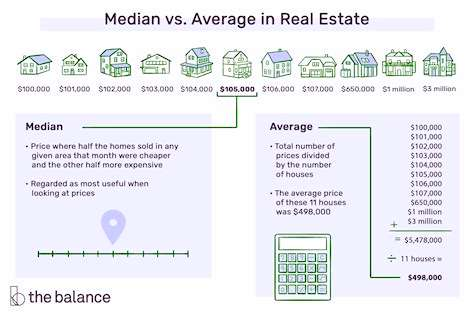
So, when it comes to hurricanes, “normal” may not actually be a number where there are an equal number which are greater and fewer. The “normal” number of hurricanes which make landfall average 17.7 in a decade. But there are 2 decades which had 12 and only 1 which had 24. The median number of hurricanes in the last 17 decades is exactly 18. The range is 12 to 24. Actually annual figures for “normal” don’t make sense when talking about hurricanes that make landfall. The range is 0 to 4, so??
So, there’s “range.” That’s pretty important, I would think. When it comes to evaluating professional baseball players, range is significant. It ranks players’ abilities. There is also a range for number of hurricanes, temperature of the earth, and how much money a person makes. I’ve never been near Bill Gates’ end of the financial range. I have been near the “can’t afford catsup this week” end of the range.
When it comes to Global Warming, ought we to know all these things? Average, median, and range? I would think so!!! The “range” is absolutely huge. The annual temperature of the earth has migrated all over! We’ve had ice ages with glaciers as far south as Ohio and saunas with jungles as far north as Canada. HUGE range! Most of northern Europe was under ice at one point. Thankfully Global Warming took care of that.
We have been TOLD that earth is “above normal” (average), but what scientists mean is “above normal based on the last couple hundred years,” not “above average based on the last couple million years.” Further, they never give you the median temperature of the earth.
One more thing about average is that, when it comes to earth surface temperature, there is no such thing as “average” or “normal.” There was a day in my lifetime when the high and low temperature over one day was nearly a 70 degree swing. (I think the day started at below zero and ended above 60 degrees). How do you “average” a day like that into the rest of the world? Yet the soil temperature at 18 feet below the surface, on that day, barely registered any change at all. Maybe THAT is the critical point!
18 feet deep seems significant. When you measure temperature at 18 feet it DOES change. Colder at the end of winter and warmer at the end of summer. Record temps at that spot quarterly and you have the actual average temperature for that location which will tell you if there was a true change. If 18 feet down is 57 degrees every year on July 1 for 50 years, and one year it is 58, or 56 degrees, then you KNOW something significant happened. Interestingly, we do have accurate readings for 18 feet down for the last 75-100 years. No one takes the time to publish or study them when it comes to “Global Warming” theory.
On the other hand, ice will melt on a 26°F degree day if the sun shines on it. So the amount of cloud cover can impact how much sea ice will melt. It doesn’t have to be a major change in weather to melt sea ice, just a change in cloud cover.
What does it take to change climate? In the early 1800s a volcano eruption in Asia stopped summer crop growth in most of mid-Europe and mid-America and Canada. Farmers couldn’t grow enough grass to support their herds. More recently, we attempted to make positive changes to Global Warming by requiring ships to install smoke scrubbers. However, reductions in ship emissions has reduced the cloud cover over the Pacific causing the water to warm unnaturally. It came from a failure to understand the value of soot in the atmosphere. Soot can be natural, like from forest fires, or from storms sweeping dust into the upper atmosphere. Reducing small particles in the upper atmosphere can cause surface temperatures to rise in summer, but may not change the temperature at 18 feet.
Why do I mention 18 feet repeatedly? Because we have records for almost everywhere in the world. (Michigan soil is colder than Kentucky soil.) Why? Gas stations. Millions of them. They have to know what temperature the gasoline is stored at in order to calibrate the pumps to deliver accurate gallons or liters. What’s THAT average or median, and what’s the range? Better yet … has “Global Warming” revealed itself where the truth can be truly felt … 18 feet down?

Copyright 2025 Donald Whelpley
[PLEASE NOTE that Don is always open to discussing the thoughts and opinions he shares here and welcomes comments as shared in the comment section. He doesn’t use other social media platforms and won’t see whatever you’d like to share with him if you post it elsewhere.
ALSO, Don is always open to offer his thoughts on various topics. If you have a specific request, you can let him know in a comment; he reads – and replies to – them all. ~ Sherry]

See more GUEST POSTS from Don!
That moment you realize that people have been lying to you all along by using “average” when “median” gives a clearer picture, is the moment you suddenly become just that much more wise.
We are going to need that wisdom. A.I. is coming on strong.