PREQUEL to BLURRY MOUNTAIN: “THE UNSETTLING”
© 2026 Donald Whelpley
CHAPTER FIVE. SLOW AND PURPOSEFUL.
On the coastal plains there were more slave than free, more black than white. The Negroes were not talkative. They always seemed to move with purpose, and looked neither left nor right. Once Grigor stopped negro man to ask directions. The man was furtive and only answered what was asked. It was all, “Yessir, Massur,” “Nosir, Massir,” and “Long thaddaway fer a mile ‘r so, Sir.” It wasn’t English, it wasn’t Colonial English, and it was hard for him to understand. The family all heard it, and they guessed what the man had meant. As it turned out, they were on the correct road, and they would find their objective shortly. Grigor was perplexed. English was hard enough, and he didn’t want to learn another language, too. It would turn out that he would learn something else “not quite English” later when he tried talking with people living on the frontier mountains.
The coastal plains were easy to traverse, being relatively flat. But the land sprung upward (probably no more than a few hundred feet over a two, maybe three, miles), streams had rapids, and the family walked to spare the horses. With a reduction in stored foods now the wagon was a few pounds lighter. At this point they also reduced the amount of water in the barrels. 5 or 10 pounds doesn’t sound like much, but with the heat and humidity it was necessary. Reaching the Piedmont everything smoothed out again and only a few long days passed before they reached Charlotte. They needed more foods, more wheel grease and one new canvas tarp. Branwyn was thinking ahead and realized they would need new shoes if they were to do much walking, she found a light shoe called a moccasin and bought a pair for each member of her family. She also was sewing backpacks and an over the shoulder padded canvas gun case for the flintlock to take additional weight out of the wagon once they reached hilly country. The inside of the outer layer of canvas was made waterproof.
On the Piedmont hardwoods replaced the pines, allowing them to make better fires and better wood for whittling useful things, like a handle for a knife; the original had gotten too close to the fire and was badly damaged. The hotter fire allowed Grigor to give a try at melting lead for bullets. The first attempt was not perfect. He went light on the metal leaving the bullets uneven. They could be remelted. Nothing was lost.
There were many differences there, including more deer and rabbits and fewer people. Even the rocks and stones were different, moving from sedimentary rock to harder forms. Lakes, swamps, and ponds were more common since the soils contained less sand. It remained too warm, but there was a bit less humidity. The fields were filled less with tobacco and cotton and more with corn and grasses (like wheat, barley, and rye). They bartered for some milled rye which could be added to breads, pancakes and even soups.
After their first day out from Charlotte, Grigor called a Sabbath. They worshiped and prayed daily, but he felt they all needed a full day of rest. The horses were thinner. The family was worn and irritable from the jostling and heat. So he had the children set up some rope lines around a circle of trees to give the horses some freedom of movement. They took off their halters and brushed them down and allowed them to graze at will. A bucket of water was set out and they drank heavily.
After their day of rest, eating bread and leftover beans, they were heading on the road toward Rutherford County, then on toward Buncomb County. Mountains could be seen in the distance, growing day by day. Only the driver stayed in the wagon when heading downhill to reduce the stress on the horses and brake. Up grades they walked as well to take weight off the wagon.
Grigor hired himself to a farmer for two weeks. They needed a few things and the farmer was willing to pay his wages in grain and several pounds of smoked hog and hog fat. Hog fat was needful. One cannot digest protein without fat. Even frontier folk knew they couldn’t survive on rabbits or venison without some beaver or bear fat thrown in. Plus pork fat flavored everything so wonderfully.
Even so, Grigor enjoyed talking with the farmer. It seemed that almost every landowner on the Piedmont had three things they agreed upon. They seriously disliked government. They wished they could sell and move west. Third, that farming the good earth was hard work. Cotton farmers created their own cotton processing facility to make more money. Tobacco farmers had their own drying barns and cutters. They packaged the product to make more money, too. Transporting product to seaboard cities was expensive. Processed product was lighter and more valuable to move. Same for corn. Off the cob and dry meant more income per pound.
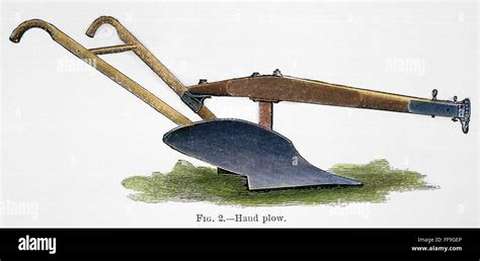
Meanwhile, Grigor was pleased that he had purchased plows to sell. He had three of the new steel plows made by the John Deere company. He was able to make 60% profit on each and the farmers thought they were getting a bargain. Grigor was merely glad to have spending money and lighten the load. Most farmers had cast iron plows. They broke if they hit a root or large buried rock. Farmers kept the depth as shallow as possible with the iron plows to avoid hitting hidden immovable objects. Unfortunately there was no way to repair a broken iron plow. With a steel plow they could turn a few more inches without fear because they could be repaired. The farmers also enjoyed that soil, especially clay, didn’t stick to the shiny new plows. More work could be done in less time.
The boys were often sent to inquire of homesteaders if they were in need of wire, nails, tin, rope, or Bibles. It didn’t take long to sell at a profit all the products they had with them. The boys learned a few lessons as well…like go directly to the house, do not stop to look at the horses or sheep. Apparently, animal theft was common. Further, they found that an accusation made it hard to make a sale. If they hadn’t returned in a reasonable amount of time Grigor would ride in on a draft horse with a rifle across his lap (unloaded and for sale).
Christmas On Blurry Mountain ~ Part 1 of 4 ~ Part 2 of 4 ~ Part 3 of 4 ~ Part 4 of 4 ~ Part 5 of 5

Copyright 2026 Donald Whelpley
[PLEASE NOTE that Don is always open to discussing the thoughts and opinions he shares here and welcomes comments as shared in the comment section. He doesn’t use other social media platforms and won’t see whatever you’d like to share with him if you post it elsewhere.
ALSO, Don is always open to offer his thoughts on various topics. If you have a specific request, you can let him know in a comment; he reads – and replies to – them all. ~ Sherry]

See more GUEST POSTS from Don
In that era a man earned $1/day and could buy an ox (half a tractor) in 40 workdays. Women’s wages were half that. But 600 lb of bacon only cost $30 (that’s only 5 cents a pound, but you had to slice it yourself).
On the Piedmont there were many people of faith in the early/mid 1800s, but few churches or fellowships existed. If you traveled the area in that era you might be asked to pray and read the Bible together with a homesteader. Often non-believers would oblige because friendships were more precious than time or personal opinion.