TRUE “MYTHS”
8 myths about electric cars
“Concerns about the environmental benefits, dangers, and longevity of EVs and their batteries are often misplaced”
By William Gavin” as published in Quartz
Responding to the “myths” as told by William Gavin, there are at least 4 which ARE NOT myths at all. These 4 are factually true, or his statements turn out to be factually false. Quotes from his article, followed by comments from this writer. So, bottom line … don’t believe everything you read on the internet.
“Myth 1: EVs have a higher carbon footprint”
“Before taking into account emissions from mining, manufacturing, refueling, and disposing of old cars, EVs emit less than a third of the emissions compared to gas-powered vehicles. When those factors are included, fossil fuels still generate about twice as much carbon, according to The Washington Post.”
Let’s examine this “fact.” This “fact” is not based on a 35-mile-per-gallon gas engine car. It is based on the average mileage of every car, truck, and van that is registered for use on highways today. Some get 12 miles per gallon, others 18, others 22, etc. Some are 20 years old, some new. The average MPG of all passenger vehicles sold in 1978 was 13.5 (some are still on the road). That average was 22.1 MPG for vehicles sold in 2017 (and many of those are still being used). That’s not a fair comparison, is it! Don’t compare the average car registered for the highway to a new EV!!! If on the other hand he compared an EV to a newer 35 MPG gas car, like the one I own, the amount of carbon generated by MY car would be FAR LESS than the average of all passenger vehicles still on the road (definitely not close to “twice as much carbon” compared to an EV)!
Since fair play is not used in slanted articles like Mr Gavin’s, it is hard to know the truth, isn’t it! By the way, few serious writers claim that EVs produce more carbon (there are a few bad actors but I don’t believe them either), most I have read state that the difference in emissions are not as great as those promoting EVs proclaim. That still holds water here.
His statements are factually false.
“Myth 4: EVs will devastate the electric grid”
“Consumer Reports last year found that it will take until about 2050 for all vehicles on the road to be electric, even if all new cars sold by 2035 are EVs. By then, electricity demand would likely increase by 1.1 trillion kilowatt hours, or 26%, compared to demand in 2023.”
Interesting, isn’t it! Just when every electric company in the country is trying to transition to solar and wind, we need 26% MORE electricity! Well, please understand that many electric service facilities are already close to maximum output (our home has lost power 6 times this year already). That is because we have been building homes as fast as we can. Every home adds stress to an outdated and overloaded system. So, from where is this extra power supposed to come? We are preparing to decommission scores of natural gas based power generation facilities as well as a score of hydro-power dams. I think this is a short-sighted direction, eh?
This isn’t a myth, it is a true criticism. Today’s electric grid can’t handle it. To make the electric grid work will involve building MORE power stations and upgrading millions of miles of electric lines.
“Myth 6: EVs don’t have enough range”
“Additionally, despite a shaky start, the federal government has started handing out more funding provided by the National Electric Vehicle Infrastructure (NEVI) Formula Program. State governments will draw from NEVI’s $5 billion budget to hire firms to make charging stations. Eventually, the government aims to fund federal chargers in every state.”
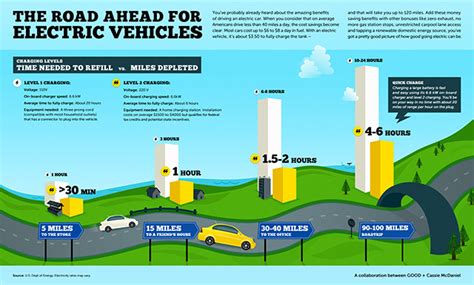
Yes! Trust the government to do the “right thing?” They have been working on setting up charging stations for ~9 years. The number of stations the government has added as of May this year… 8. The number of EVs is nearing 2 million. 1 government charging facility for every 250,000 vehicles after 9 years. The government wants everyone to buy one. But at this rate they won’t have a charger within YOUR driving range for another 25 years. $5billion budget? For what?
Truth, with the system of charging stations we have today (government or otherwise) there is almost no simple way to travel from California to Maine via an EV. It would be cheaper and faster to travel by Amtrak (a 200 year old technology).
Myth 7: EVs are way too expensive
“The average EV went for $56,575 in July, compared to $48,166 for all new vehicles, according to Kelly Blue Book’s latest figures. That’s a big difference up front, coming in at $8,409 … “
You can get an inexpensive car for your teen for less than $30,000 new. $8,409* is more than ¼ of that. That’s a big difference up front, absolutely! So, if husband, wife, and new driver all get Evs you are talking an extra $25, 227 out of a middle class family budget. Where is this EXTRA money coming from? Groceries? (I can tell you this, my family won’t be spending $57k for a new car anytime soon.)
By the way, he cheated with the above prices. He doesn’t tell us the average price for a gas-powered vehicle so we can compare correctly. Look again at the the quotation “for ALL new vehicles.” That average includes EVs*. If EVs account for 10% of new car sales the price difference is more like $9,344 (not $8,409) which makes EV prices 20% higher than those of gas vehicles (not 15% higher based on his faulty data).
Truth, EVs are too expensive.
“Myth 8: EVs are too heavy for roads”
“Electric vehicles are — in almost every case — heavier than their gas-powered counterparts. On average, they’re 30% heavier than gas-powered cars …”
“Too heavy” for the roads is not the only issue. During rush hour there can be hundreds of cars on bridges. Our bridge infrastructure has problems and adding 30% more weight to a sub-par bridge seems like a bad idea. Parking structures were built for lighter cars. Driveways are thinly paved. Residential streets won’t last as long. The highways? Not the whole issue.
Did I mention that many EVs are shipped by ship, rail, and car-hauling semi. Add 30% more weight and those conveyances have to reduce the number of units per trip by up to 30%. That adds cost per unit. This works out nicely to a serious increase in delivery fees.
Truth, EVs are too heavy.
Mr. Gavin’s concept of myth (misplaced concerns) is far different from YOURS. You imagine he is saying that these things are FALSE. However, he admits these are TRUE MYTHS (thus your concerns are not misplaced).
The truth is we cannot afford it. We can neither afford the extra cost (on which we will pay interest for 6 years) nor the extra time it takes to charge when on a decent road trip. If the result was that we saved the earth as a result we might be willing, but it won’t. A government study on the total electrification of American homes and personal transportation showed that Global Warming goals of 2050 were unachievable.

[PLEASE NOTE that Don is always open to discussing the thoughts and opinions he shares here and welcomes comments as shared in the comment section. He doesn’t use other social media platforms and won’t see whatever you’d like to share with him if you post it elsewhere.
ALSO, Don is always open to offer his thoughts on various topics. If you have a specific request, you can let him know in a comment; he reads – and replies to – them all. ~ Sherry]

See more GUEST POSTS from Don!
I find “news stories” every day which are filled with lies. The big one today was (again) that we should shift entirely to plant-based proteins.
The story missed 3 important facts. 1) Farmers aren’t paid as much for plant proteins. Many farms would fail. Then where would we get plant proteins? 2) Even if we turned every farm into plant-protein farms there would not be enough plant proteins to feed the world. Mass starvation would result. 3) We can’t solve the warming problem this way. It hardly nudges the needle.
Just like the expensive EV, it cannot work. I am too practical to allow stupidity to rule my life.
From a purely personal perspective on that topic, I have learned that plant-based foods would have me bedridden, in constant agonizing torturous pain, unable to be a functioning human being at all, a situation from which western medicine has been unable to offer any sort of relief. I only have the ability to function at all due to my animal-based diet, and I am far from the only one. For me, any other factors are irrelevant.
Thanks, Owly
That is something I had not considered. Plant proteins are more difficult to digest in many cases. I enjoy some, but I cannot imagine a diet of only them.
Plus, the issue of always having to take your own food on trips or outings.
I read once that a high number of former vegans and vegetarians would never go back.
I have a solution for the expansion of charging stations (EV owners will hate it). If something is profitable, businesses will invest.
The problem is charging is too inexpensive to be profitable. There are several gas stations nearby which have lots of room for charging stations, but if they can’t make money off of them they won’t. Yet every one of them makes money off of air.