PRACTICAL APPLICATION OF “THE MIND OF CHRIST”
My assumption is that some things are, to some degree, within our control as humans. Some portion of auto accidents are the result of things we CAN control. For instance, when the roads are icy, we could reduce the probability of sliding into the ditch by merely lowering our speed. That is not to say that lowering speed will always prevent sliding into a ditch. Sometimes we would have to choose to avoid traveling in icy conditions to prevent all such. So, some portion of accidents that happen are caused by or contributed to by our own decisions. For instance, choosing to drive drunk is one decision which we know contributes to accidents, injuries, and deaths.
Now, my second point is that we misunderstand the value of having “the mind of Christ.” Having “the mind of Christ” is a statement regarding how believers make decisions. In its simplest form “the mind of Christ” is like asking (when a choice is to be made) “How would Christ decide this? What would Jesus do?” Well, we see from the temptations Satan threw at Jesus when he fasted for 40 days that he DID decide things from a different viewpoint than most humans would. Those temptations, if presented to the average human, would have had different answers than Jesus gave. The average human would have selected bread instead of God’s Word. The average human would have enjoyed the protections of angels instead of being hungry in the wilderness. The average human would have KILLED to be king of the world.
Therefore, having “the mind of Christ” should mean something significant to believers. For one, it SHOULD mean that believers (as a test group – see next paragraph) are better decision-makers than non-believers. We should be better drivers. We should have fewer divorces. We should have fewer financial problems. Why? Because the decisions we make should be tempered by a desire to DO what Jesus would do. We have the smartest Being in the universe helping us after all. Therefore, as believers as a whole, we would be less likely to fall into the common human decision-making errors.
If this were the case we should find, in a controlled study, that 1,000 non-believers might have 55 fender benders over a 10 year period, but 1,000 believers only 49. Same with divorces … maybe 72 non-believers would divorce, but only 68 believers. Same with financial problems. The point is that there should be some discernible difference when a believer has “the mind of Christ.”
If we believe, as some do, that ALL humans make the same mistakes whether believers or non-believers, cheat on spouses, go through mid-life crises and buy sports cars, etc. then we miss the value of teaching that we should have “the mind of Christ.” “The mind of Christ” should have some practical application for living as believers. It should stop us from living foolishly, at least some of the time.
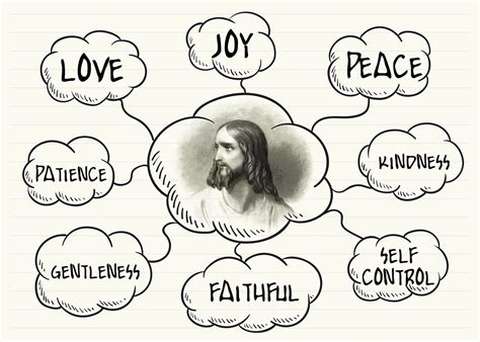
I believe that believers are supposed to behave differently than non-believers. This is not merely in “spiritual” matters, but in all of life. I Corinthians 6 has an interesting take on the change. Starting in 6:9b Paul writes “Do not be deceived: neither the sexually immoral, nor idolaters, nor adulterers, nor men who practice homosexuality, nor thieves, nor the greedy, nor drunkards, nor revilers, nor swindlers will inherit the kingdom of God. And such were some of you. But you were washed, you were sanctified, you were justified in the name of the Lord Jesus Christ and by the Spirit of our God.” (6:9b-11 ESB). What is interesting there is that Paul expects these believers to behave (and think) differently than unbelievers. The specific issues he mentions are only examples. The concept goes much further. Paul also expects that believers will make better life choices, better decisions, behave better, and be nicer. He expects believers to think differently, not give into human passions and lusts, and be better examples for others.
In other words, believers are to CONTROL themselves.* They are more loving toward spouses (and slaves). They are more thoughtful in how they use money (and possessions). They are more careful when driving, with how much they eat, and what they say.
*To amend what I said in the first sentence of this paragraph, “believers are to GIVE UP CONTROL OF THEMSELVES. The “mind of Christ” within them is a clear call to turn over control of their decisions to the Holy Spirit.
Are believers BETTER than non-believers? I’m not saying that. I’m saying they are only improved by turning over their decision-making process to the Holy Spirit (who is so much wiser than they are). The results could even be identifiable in a scientific large group study.
Can believers be PERFECT? No. But they CAN be better, less selfish, more advised, and more directed. In fact, I believe they CAN be perfected, but not perfect. They are not doomed to continual failure. I believe, from experience, that they can fail far less than the average person when it comes to choices. They will fail just as often due to accidents, ignorance, or lack of spiritual preparation.
Romans 8:28
“And we know that in all things God works for the good of those who love him, who have been called according to his purpose.” – Romans 8:28
James 1:5
“If any of you lacks wisdom, you should ask God, who gives generously to all without finding fault, and it will be given to you.” – James 1:5
Proverbs 3:5-6
“Trust in the Lord with all your heart and lean not on your own understanding; in all your ways submit to him, and he will make your paths straight.” – Proverbs 3:5-6

Copyright 2026 Donald Whelpley
[PLEASE NOTE that Don is always open to discussing the thoughts and opinions he shares here and welcomes comments as shared in the comment section. He doesn’t use other social media platforms and won’t see whatever you’d like to share with him if you post it elsewhere.
ALSO, Don is always open to offer his thoughts on various topics. If you have a specific request, you can let him know in a comment; he reads – and replies to – them all. ~ Sherry]

See more GUEST POSTS from Don
messianically, radically, we have to sharpen it and call out where it drifts.
The post leans heavily on Philippians 2:5–11 (“let this mind be in you which was also in Christ Jesus”) — beautiful verses — but it stays in the soft, feel-good, “think like Jesus” territory without the hard edges Scripture demands.
Yahusha didn’t just “have a humble mind.” He was the human door who:
• Flipped tables in the temple and drove out the money-changers with a whip (John 2:15) — radical zeal for the Father’s house.
• Called religious leaders “brood of vipers,” “whitewashed tombs,” “hypocrites” to their faces (Matt 23) — no polite tiptoeing around evil.
• Warned of eternal fire, outer darkness, weeping and gnashing of teeth for those who reject Him (Matt 25:41, 8:12) — not just “be nice.”
• Commanded obedience to Torah (Matt 5:17–19, John 14:15) — not optional “principles.”
The “mind of Christ” isn’t only meekness and selflessness — it’s also righteous anger at sin, uncompromising truth, hatred of evil (Prov 8:13), and zero tolerance for compromise with idolatry, false teaching, or the world’s ways.
The post says “the mind of Christ is one of humility and service” — true, but incomplete without the radical part:
• No fellowship with darkness (Eph 5:11).
• Expose the unfruitful works of darkness (Eph 5:11).
• Contend earnestly for the faith once delivered (Jude 1:3).
• Have no unity with unbelief or false doctrine (2 Cor 6:14–18).
YHVH is ONE — singular, indivisible, the Father Alone.
Yahusha is the human door — the perfect human who walked in total obedience, loved fiercely, served sacrificially, AND judged righteously.
The mind of Messiah is both lamb and lion. Humble servant AND temple-cleansing zealot. Meek AND militant against sin.
So yes, serve others, wash feet, esteem others better — but also call out evil, reject pagan holidays, refuse compromise, hate what He hates, love what He loves.
The remnant doesn’t just “have the mind of Christ” in theory — we live it radically: no soft landings, no half-measures, no polite silence when truth is on the line.
In itself, it is radical
Few, possibly even yourself, have ever considered how radical is “the mind of Christ.”
Did you ask the Holy Spirit for guidance before you wrote your response?