“SAVING THE PLANET” with a HEAT PUMP
Can heat pumps save the planet? A government study said, “No.” That study suggested that even if every home went 100% electric and every vehicle in the USA went EV we would still fall short of the reduction goals set for 2050. Nope! Still not enough. Maybe if we had heat pumps but didn’t use them to heat and cool our homes, didn’t cook food, refused to bathe, gave up laundry, and didn’t refrigerate anything??? Maybe then! Maybe if we didn’t use cellphones, eliminated AI, walked everywhere, stopped eating meat, and had no offspring??? Probably not! There doesn’t seem to be a bottom to this pit. Except that politicians can jet off to Luxembourg for no real purpose while you can’t buy a car that goes further than 300 miles round trip, eh! Did they run out of cheese and sausage at the congressional cafeteria?

I know almost no real homeowner cares. We have more important stuff to worry about. Even so, there is a HUGE push from government agencies and climate “scientists” to transition to heat pump technology. Most of Europe has gone this direction and they are showing us the pitfalls. It is not entirely evil. Most of it is, but we can choose better. (Better is much more efficient plus lower heating and cooling costs to you.)
Just a few pieces of necessary info BEFORE you invest in this ancient technology…

It is ancient, by the way. Heat pumps have been around since the dawn of humankind. In the summer and winter the caveman family moved back inside the cave a bit further. They moved nearer the opening in spring and fall. The cave depths permitted cooling in summer and warmth in winter.
Heat pump machines were first created in 1856. They were huge machines.
“Modern” heat pumps came on the scene in the mid-1950s.
So, as you can see, it is an ancient technology which is as old at the hills.
PROBLEMS.
The usual heat pump technology being promoted and foisted on homeowners has serious problems that are only overcome by paying a lot more money than you want to pay. First, the most common cheaper models don’t perform well on extra-hot days or extra cold nights. Some ice up in the winter. Others are inefficient at cooling at high temperatures (like in Arizona). This is the experience of Europe.
Second, the expected life-span of cheaper promoted heat pump systems is about 15 years. That’s no longer than the far less expensive HVAC you presently own.
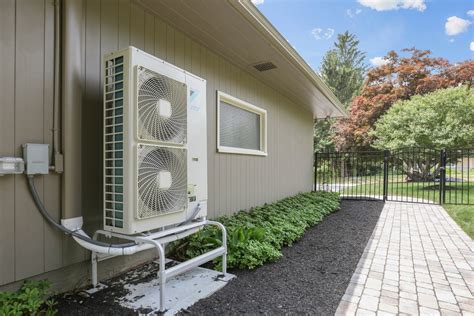
Third, the heating/cooling product running through cheaper units beginning in 2025 is propane. No one wants their home to explode, so sensors and fail-safes have to be added to prevent that. That is one reason even the cheaper ones will cost so much.
Fourth, they are not as efficient as homeowners would hope. One would hope that the cost of running that system would save some money over a conventional gas furnace and AC unit. Hope all you want, but Europeans are finding no cost savings for the extra expense of their purchase.
BUT I WANT TO SAVE THE PLANET!
Fine! If that is truly your goal then you should expect to pay a lot more for your heat pump system than your neighbors paid.
With the right system you WILL pay much more up front. However, if you buy wisely your system will last twice as long as your neighbor’s and will use half the electricity.
WHAT IS THIS BETTER SYSTEM?
It turns out that most people buy the cheaper units which exchange heat or cool with outside air. You don’t want that type of heat pump. You want a GEOTHERMAL heat pump.
Since the soil has a more constant and moderate temperature, the efficiency of your pump will remain high year round. Efficiency will not be hindered by air temperatures, sunshine, rain, snow or drifted snow, leaves or dust in the air. It also won’t be affected by bird droppings, mouse nests in the outside unit, or tree sap.
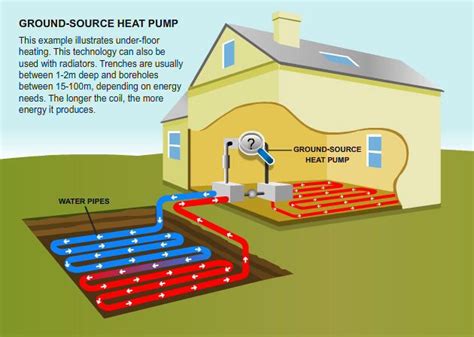
Since the unit does not have to struggle to maintain your house temperature it will last much longer. In the long run, since you won’t have to replace it every 15 years, you benefit. Also, since it isn’t struggling to shed heat when it is hot outside or struggling to find heat when it is freezing outside it uses far less energy year ’round than your neighbor’s contraption.
SUMMARY:
If you really want to save the planet, don’t get the system your neighbor (and Europeans) bought. His system has to be replaced often and uses far more energy.
Geothermal systems last 25-50 years (instead of 15), use 25-50% less energy, but cost up to 50% more up front than air units.
You want geothermal or nothing. The planet will thank you and your long-term budget will thank you.
Thank you.
Copyright 2025 Donald Whelpley
[PLEASE NOTE that Don is always open to discussing the thoughts and opinions he shares here and welcomes comments as shared in the comment section. He doesn’t use other social media platforms and won’t see whatever you’d like to share with him if you post it elsewhere.
ALSO, Don is always open to offer his thoughts on various topics. If you have a specific request, you can let him know in a comment; he reads – and replies to – them all. ~ Sherry]

See more GUEST POSTS from Don!
Geo also has the advantage of NOT requiring an ugly outside unit. You can enjoy your patio without noise. You can even bury the lines under the patio if you want. More back yard to enjoy with your family and friends.
Sounds like the way to go. I first read this the day I got our first winter (Dec) utility bill. Oy.
Thanks, owly.
Yes. Except that even Geo is not as wallet friendly as some would have you believe. Natural gas is an inexpensive fuel compared to electric. But those who MUST save the planet, Geo is the way to go. (The California fires just put more greenhouse gases into the atmosphere than all the cars did last year.)
We will be installing solar this year, a friend who lives about an hour north of us is 100% solar and has been for a long time; he will advise us. We aren’t aiming for 100%, at least not yet. We don’t have the space for a lot of batteries at this point. We’ve used our solar generator (Ecoflow) for several years and it is helpful. We will also have a generator receptacle installed. Options. It’s all about – for us – options :).
@owly
Regarding generators…
Have you investigated natural gas generators?
There are several advantages (also much expense). When the power is out it can also be out at the gas station. Getting fuel can be difficult, pouring gas into the generator tank can be awkward, etc. A natural gas generator is connected directly to the fuel line. It merely has to be checked and serviced annually.
We haven’t, no…we have looked into propane generators, however.Were the natural gas supply to be interrupted, it wouldn’t help us much, but with a tank of propane at the ready, it would last perhaps long enough – together with our solar – to make further plans.