CENTURY of “CHRISTIAN” ASIAN WRITERS
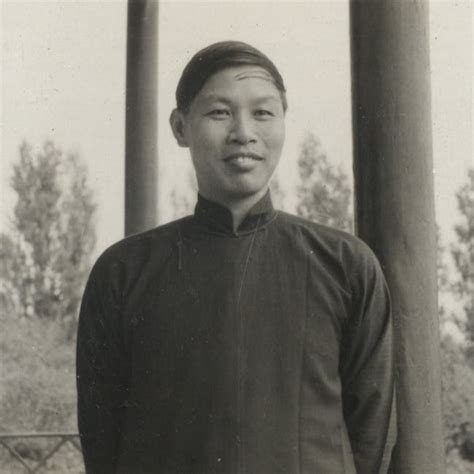
Watchman Nee
Lin Yutang
Toyohiko Kagawa
Two from China, one from Japan…they spoke and wrote about a century ago although some of their writings did not come to America until later.
Kagawa from Japan grew up among Christians (no picture available). He had a philosophy of service. He spent his life and fortune helping the poor and living among them. He could have had prestigious employment as a professor at a well-known university; he chose to write in his one-room shack among the poor instead. In the 1920s and 1930s he saw the direction Japan was headed (toward war) and he wrote much against it. He even used the image of Christ on the cross as an example for his people to resist the push toward killing and conquest in his book “Meditations on the Cross” (translated and re-published in English in 1935). His book failed to turn the tide. It may be that it failed because he painted Jesus as a man who won the heart of God and asked his fellow men to follow a merely good man. On page 91 he says: “But since Christ was a person with a deep consciousness like that of God, since he died feeling the responsibility for the whole human race, this death becomes effective for all mankind.”
Kagawa missed the point. Jesus was the Christ not because of what he did, but because of who he was. He was God. He went to the cross because he had determined that he would provide a way of escape for mankind (before he came as a baby in Bethlehem). I didn’t see the show, but a friend told me that “The Good Place” had a list written on a blackboard of those who failed to make it to “The Good Place.” Kagawa’s name was at the top of the column. The show might have gotten that one right. He didn’t even know who Jesus was. Kagawa thought the way to heaven was to DO the right things. That stands in contrast to another Asian of the same era, Watchman Nee.
In Nee’s book (he didn’t write it, it was a collection of his sermons), “Sit, Walk, Stand” he says early on: “Think again: How did we receive the forgiveness of our sins? Paul tells us that it was ‘according to the riches of his grace,’ and this was ‘freely bestowed on us in the Beloved’ [Ephesians] (1:6-7).“ We did nothing to merit it. We have our redemption through his blood, that is, on the ground of what HE has done.” In other words, we can’t DO anything to merit God’s grace, we merely accept it by faith. Nee was imprisoned for his faith for about 20 years in China. We don’t DO, Christ DID. (picture of Nee follows)
Of the three, Yutang, from China, of nearly the same era, is the hardest to mentally follow because he was a deep thinking philosopher. He grew up in the church. He purposely abandoned his faith as a young adult, then slowly walked back to it. He had become a practicing Pagan. He followed all its precepts and concepts … and found it empty of meaning. Thing is that Yutang deeply studied all the philosophers of both the West and East and found in their heady “wisdom” a lack of foundation. In chapter 8 of his book “From Pagan to Christian” he begins in the first paragraph to say: “Like the Jungfrau which stands above the glaciers in the world of snow and seems to touch heaven itself, Jesus’ teachings have that immediacy and clarity and simplicity which puts to shame all other efforts of men’s minds to know God or to inquire after God.” (Yutang picture to follow)
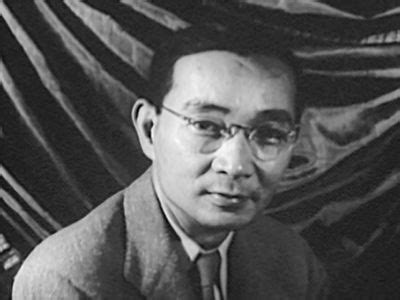
He continues in the third paragraph: “Quite apart from the content of Jesus’ teachings, I think the light and the power (dazzling light always has power) of Jesus came from the manner and the voice of His teaching and from His personal example.”
We see none of this awe in Kagawa.
He argues against doctrines, forms, and theology this way: “In actual fact, Christianity in China never made converts by doctrines, but it did make converts whenever a Chinese came into personal contact with a Christian personality who followed the Christian teachings; namely, those few words ‘Love ye one another.’” Kagawa pushed for people to GIVE UP something to “save” others, but Yutang pushed for them to GIVE CHRIST. In sympathy with Yutang, Nee pushed for trusting Christ. Doing is not the path, belief is everything.

I felt sad for Kagawa. He spent his life DOING. I see no evidence that he ever felt he had done enough or gathered many others into his camp. I have respect for all he DID, and his self-sacrifice. He may never have realized that he could not emulate Christ with his own sacrifices. That may be too critical on my part. I never met the man and I certainly never listened for his heart. I only have his translated words. (By the way, I had the feeling that his translators did not do the best job possible. There were places where the translation was awkward or sketchy.)
Regarding Nee, many of “his” writings are NOT his writings. They are good, but when you read a book he actually wrote (like “The Spiritual Man”) you see a much deeper work than those where his speeches were collected and made into books. It is unfortunate. I still RECOMMEND highly the collection called “The Normal Christian Life.” So many try to read it and walk away unsatisfied. There are times when one should not power through a reading, but stop and consider it paragraph by paragraph. When I read the book aloud, stopping often to challenge the writer, I found the man kept winning me over.
Yutang is for that college Sophomore who thinks he knows more than he does. That person would appreciate the references to hundreds of philosophers and theories. I like my readings to be much more simple and straightforward. Tell me what you’re going to say, say it, then tell me what you said. Yutang is worth the time, but often frustrating because he seldom walks the familiar paths. So, I’m not opposed to the time spent understanding what he is saying, but I’m thinking maybe he could have gotten to the same point via a shorter, straighter path.
You can find all three online for free, but time isn’t free … so the one I recommend is Nee.
Copyright 2026 Donald Whelpley
[PLEASE NOTE that Don is always open to discussing the thoughts and opinions he shares here and welcomes comments as shared in the comment section. He doesn’t use other social media platforms and won’t see whatever you’d like to share with him if you post it elsewhere.
ALSO, Don is always open to offer his thoughts on various topics. If you have a specific request, you can let him know in a comment; he reads – and replies to – them all. ~ Sherry]

See more GUEST POSTS from Don
Comments