PANTRY PESTS
No one enjoys unexpected moving meat in his or her oatmeal breakfast! Sorry!
There are pantry products which may contain pests and products which may become food sources to pests. I spent 30 years helping people eradicate pantry pests from their homes.
First, products which most often introduce pests to your home:
1. Bird seed. Birds are sensitive to pesticides (even those considered “safe” for cats and dogs). So, bird seed is unlikely to be treated with pesticides. Therefore, pests are more likely to infest them in the warehouse long before they are purchased and brought home. Best preventions: Buy small bags. Keep the seed in your freezer (inside another bag) and only remove one serving at a time. Freezing the product will not harm the seeds. Note: If you have an attached garage please do not store bird seed there. Mice love bird seed.
2. Dog or cat treats. Again, these are products made from lightly-treated field products. The most common ingredient is cracked corn which can harbor several types of pests. Best prevention is to buy small quantities and/or store excess product in your freezer.
3. Nuts purchased from a roadside stand (i.e., Georgia pecans). Most nuts bought from stores, on the other hand, have a tiny amount of Insect Growth Regulator (IGR) added to inhibit insect reproduction. (The amount of IGR used is insignificant for pets and people and IGRs typically have zero effect on vertebrates. In other words, don’t give it a second thought unless you have insect relatives on your father’s side.)
Second, products which will attract pantry pests:
1. Flour and flour mix products.
2. Nuts and seeds.
3. Dried products, like rice, beans, lentils, raisins, open spices, and oats.
4. Cured meats, like beef sticks or jerky. (Not sealed in cans).
5. Unusual products, like “honey-nut” bagels (because of the nut pieces).
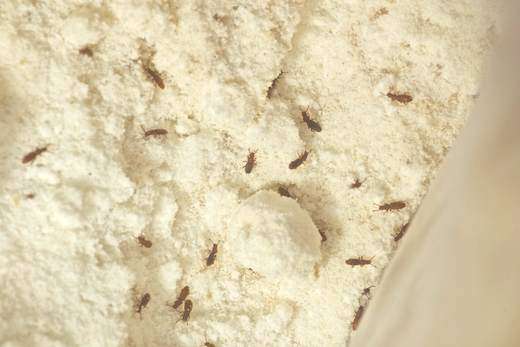
One good prevention practice is product rotation and cleanliness. Write the purchase date on every product (example: June, 2025). Remove all pantry products annually (spring cleaning), inspect every container for pinholes (insect exits), larvae, etc., then vacuum and wash the shelving to remove loose debris. Throw out any open product that is over 2 years old (even dried beans) and anything that looks or smells “iffy.” Replace product on shelves with the freshest in the back. If you tend to buy too much of a particular product (like steak rubs) remind yourself next time you are tempted that you already have 15 of them (almost everyone does, for some reason).
What are some of the common pantry pests (besides your teenage son)?
1. Flour Beetles. Named such because of what they commonly infest. There are several varieties. Most won’t make you ill if you ingest them with your muffins, but there is the “ick” factor.
2. Indian Meal Moths. At rest they look like slim (pencil like) silvery insects with brassy tips to their wings. In the product look for “spider webs” which cause the material to clump together. Often people first notice whitish larvae (“worms”) on their walls or ceiling.
3. Dermestid Beetles. These critters kinda prefer decaying meats (like the dead bird in your gutter). They can get into cured meats.
4. Drugstore and Cigarette Beetles. Rare, but difficult to eradicate. You don’t want these ever.
5. Mice. (Ok, not an insect, but commonly found in pantries). Hire a professional if you are finding rodent droppings as rodents are a major health issue.
Prevention is preferable, treatment is difficult. Prevention includes inspecting your purchases BEFORE purchase. Reduce inventory in your pantry. Freeze product when you have “too much.” Plan some “use up this” meals and snacks.
Treatment includes getting rid of infested and opened product, cleaning shelves, double-packaging unopened products and storing them in the freezer for 6 to 8 weeks. It may also include a professional pest control treatment if your efforts do not solve the problem within 8 weeks (or, just begin with a professional and save 8 weeks).
If you had mice, there are biological residues everywhere. You may find yourself getting a “cold” or “flu” more often than usual. (Hint: It may not be a cold or the flu). The absolute first thing to do is eliminate remaining mice. (I prefer baits or snaps; glue boards are cruel. Most snap traps are re-usable and should be re-used if possible. Oddly, a trap that worked is more likely to work well again than a new one.)
Second, seal up exterior entrances to prevent future infestations. (People make the mistake of sealing the mouse hole in their pantry and forget that mice in the attic WILL find a way to food in the pantry. They should stop the mice from entering the home.)
Then, while wearing a mask and latex gloves, remove food products from the pantry, throw out anything the mice have gotten into. (If there was heavy activity I suggest throwing out any package which cannot be cleaned with soapy water.) Vacuum the shelves and wash them with soapy water (add a touch of bleach if you want). Rinse with clean water and allow to thoroughly dry. Finally put the product back on the shelves.
This is important for your health and safety.

Copyright 2025 Donald Whelpley
[PLEASE NOTE that Don is always open to discussing the thoughts and opinions he shares here and welcomes comments as shared in the comment section. He doesn’t use other social media platforms and won’t see whatever you’d like to share with him if you post it elsewhere.
ALSO, Don is always open to offer his thoughts on various topics. If you have a specific request, you can let him know in a comment; he reads – and replies to – them all. ~ Sherry]

See more GUEST POSTS from Don
Unfortunately, bad advice abounds on the internet.
Yahoo Homestead has: “Stop ants in their tracks with one common ingredient” The post continues: “Keep ants away the easy, chemical-free way” Written by Tamara White, Thu, October 16, 2025.
There are two problems. First, she recommends using “20 Mule Team Borax“ to create a toxic bait. Wrong product. That soap never has used boric acid as an ingredient. Boron is a cleaner, boric acid is a pesticide. They are not interchangeable. If you want to use a boric acid product there are several available, like “Roach Prufe.” You can even buy common boric acid powder.
Second, while boron is NOT manufactured, boric acid results from a chemical mixture and it can be toxic to vertebrates if ingested. Keep out of reach of children and pets.
It doesn’t seem to me that putting chemicals with which one is unfamiliar, that have toxicities and potential issues, everywhere with no knowledge or consideration for best practices in application, just doesn’t seem smart to me.
Absolutely, owly!
One would think that a product bought at the hardware store would be safe. But if you haven’t read or understood the directions it CAN’T be safe. As a pest control tech I made it a point to annually re-read every label for products I used. Humans sometimes forget, even I. However, a friend had a problem with Odorous House Ants and I had him buy a product which has no odor, no toxicity for vertibrates, and is easy to administer. The ants were gone in 24 hours and still haven’t returned (over a year). He used a teaspoon (measurement, not silverware). Right product, right treatment, DONE!
If he had used almost anything else the treatment would have been much more toxic AND it wouldn’t have worked.