EMOTIONAL STABILITY
“Do not drive or operate heavy machinery” is the warning after sedation or anesthesia for surgery. Excellent advice! Anesthesia discombobulates one’s senses. I read up on the anesthesia from my last medical event. The half-life of the anesthesia product was 10-20 minutes. Two hours after waking I was still under its influence. I just wish they wouldn’t wake me up so soon. (Seriously! What would it hurt to let me sleep 5 more minutes?)
I remember the warning used to include these words (which I don’t think are included anymore): “Avoid making contractual agreements.” Those should still be included because the euphoria of coming back alive from fake sleep does change one’s perceptions. (When I awaken from sedation I imagine myself funnier than I really am.)
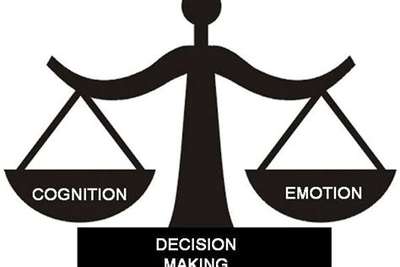
Reading about the Stockholm Syndrome it became clear that our emotions take over at points of tragedy, fear, fright, funerals, and even weddings. Our brains do not always know how to handle the emotions we are feeling. Fear can feel like attraction, joy can feel like sadness.
Psychologists have been studying romance for more than a century. They KNOW now how to MAKE you fall in love. I kid you not. Experiment after experiment have resulted in scores of individuals becoming couples (that should be illegal, but isn’t).
I learned 30 years ago that something sometimes happens when a young family seeks to buy a house. Suddenly they lose their marbles and begin buying lots of stuff. They buy cars, boats, an acre of land in the country, or jewelry when they should be securing that money for the needs of the new house. Realtors may counsel younger couples to avoid those kinds of purchases and concentrate on the house they are buying. In some cases, if they don’t, their credit rating will drop and the bank will back out of the loan or increase the interest rate.
In times of emotional stress our minds often merely choose to attach to SOMETHING or SOMEONE. We begin to think things we otherwise would not. Suddenly, he says, “I think I love her,” or “I should buy that couch,” or “I hate chickens.” However, when we are under any kind of unusual stress we might be best served by waiting and allowing the stress to reduce before pulling the trigger.
A few days later, a more rational person might think, “I like her, but I don’t know if I’m ready to marry.” She thinks, “I’d like a new couch, but the colors of that one don’t match my decor.” Sam thinks, “I still don’t like chickens, but I don’t hate them.” It was the overload of emotion that pushed for black and white thinking.
So, when making a decision, signing a loan, buying anything, deepening a relationship … (DO THIS) first look at the emotional upheavals you are going through right now. Are you about to graduate and you are exhausted trying to get those final papers and projects done? Is your boss pushing you? Has a “friend” treated you badly? Have your parents recently divorced? Did you have a fender bender?
Second, allow some normality to return to your life. Then re-evaluate what it was you thought you wanted to do. One couple sought marriage counseling because they felt guilty for having sex. Guilt is a great motivator. I counseled them to back off (stop having sex for a couple weeks … that, by the way, has never killed anyone), then come back to talk about marriage. They returned. They had realized for themselves during those weeks that guilt was pushing them. They weren’t ready for either sex or marriage yet. They had little else in common.
Third, seek help. I know, you think you are being rational. And you are!!! Except that something may have short-circuited your brain a bit. You need a calming influence, someone who can talk you through the recent events and help you to slow down. Don’t go to that “friend” who is always making a crisis out of a disappointment. Instead, go to that “friend” who always seems to consider both sides. You need someone who can see more colors than black and white. Someone who can calm you and help you imagine the value of every side of an argument. (That wouldn’t be me, by the way. That would be my wife.)
Fourth, stop and check the data (double check). Hurry leads to mistakes. I have mentioned it before elsewhere, but if you are headed the wrong direction you won’t reach your goal. Once we were on our way to an out-of-state funeral. The route was new. After a few hours we realized we seemed to be traveling on a bunch of surface roads. Checking the settings on the mapping program we found that when the phone updated last time THE PHONE removed several of MY settings. We stopped, reset the options, and suddenly we were using Interstate routes again. So, there are times when it is just best to stop and check the data one more time. If you missed a comma the math won’t work. If you turned the wrong way you need to turn around. If you feel you are on the wrong path, stop and think. Where was that last trail marker? The incredible thing is that anxiety or frustration will make you forget this important step. A relative was driving home from another state, drove for six hours (true) before realizing she was going west instead of east. The only thing to do was pull off at the next exit, stop for gas, and go back.
Our decision-making should have a warning label: “When under stress do not drive or operate heavy machinery. Avoid signing contracts.”

Copyright 2025 Donald Whelpley
[PLEASE NOTE that Don is always open to discussing the thoughts and opinions he shares here and welcomes comments as shared in the comment section. He doesn’t use other social media platforms and won’t see whatever you’d like to share with him if you post it elsewhere.
ALSO, Don is always open to offer his thoughts on various topics. If you have a specific request, you can let him know in a comment; he reads – and replies to – them all. ~ Sherry]

See more GUEST POSTS from Don!
Comments