ELECTORAL COLLEGE EXPLAINED
When first enacted our Electoral College had many flaws. Those have been mostly solved through careful thought and legislation. For instance, at one time, the person with the most votes became president and the person with the next highest number of votes became vice president. That meant that the #2 guy was usually the president’s greatest opponent. That was solved.
Other countries which have tried this system have abandoned it. That is true, but most countries which tried it could fit inside the state of Texas (either by size or population). France, for example, gave it up. The issue in the United States is that we have people groups which are much more diverse than they have in France. For instance, we have more people of Chinese descent than anywhere else in the world outside of China, and a large majority live in the West . We also have a higher percentage of blacks than any other country outside of the African continent. Where they live in the USA is important. The South has a higher percentage of black residents than the North. If we had a straight popular vote, the value of those unique voting blocs would be lost.
Our coasts vote differently than our middle. Our coasts also have generally higher number of voters. So, California, New York, and Texas could put more voters for a single candidate than as many as 12 other states. The Electoral College balances that slightly. I say slightly because the number of EC members per state is based on a formula which is more like a combination of House seats plus Senate seats. That +2 means that every state can have an impact. States Rights are important to our governing principles. The EC adds importance to states, like North Dakota, which otherwise would not matter in national elections. So, instead of merely campaigning for votes in California, New York, and Texas candidates have to show they understand the unique needs and hopes of the many states outside of those highly populated areas. They have to spend time in Michigan, Pennsylvania, North Carolina, Florida, Indiana, Arizona, Tennessee, etc.
There is also the difference between cities and rural areas. Voting maps consistently show that rural voters respond much differently from city voters on a variety of issues. Without the EC the concerns of those rural voters would easily be ignored by presidential candidates. The candidates would never set foot, for example, in rural Iowa, or Ohio.
There is, in addition, the shifting nature of special voting blocs. For instance, at one time Unions held sway in places like Detroit and Pittsburgh. Now, those places don’t have as many union members as they once did. Instead, union factories have gained strength in diverse locations in Texas, Tennessee, and Indiana. Without the EC those new Union hot spots would fail to impact elections to the degree they once did.
My point is that without the Electoral College national elections in the USA would be determined by far fewer states and regions, people groups and union people, rural areas, etc. The diversity which fuels America would be divested of value.
There could be positives for a popular vote, but even that is not a perfect system. Why give up a very good system for one which fails to balance the interests and hopes of special groups and regions?
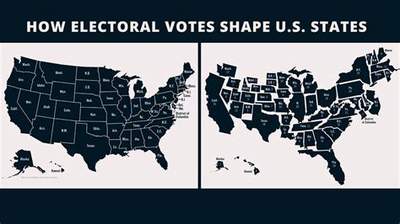
I didn’t mention a few other problems with popular elections.
First, presently candidates have to register as candidates in each state. In a nationalized popular election the candidate might merely have to register once. The big deal is all the outlier “candidates.” Presently, Ohio might have 14 candiates, only 4 of which have registered in more than half of the other states. Wisconsin might have 12, Oklahoma 22. Imagine super long ballots which have over 100 candidates (including one from the American Shopping Party) if we went to national voting! (By the way, I am not inflating that number.) If we give up the EC we likely give up states rights to national voting as well.
Second, most countries which have moved to popular voting found that they needed “run-off” elections. Often no candidate received 51% of the popular vote on the first ballot. So, they needed a run-off for the two (or 4) with the highest number of votes. What a pain that would cause!!! Some countries continue to vote UNTIL there is one with a majority.
Voting is a royal pain!!! I wish I didn’t have to endure it repeatedly until I die. Imagine having to do it twice every four years to secure popular elections!
Third, it is hard enough to get out the vote. If my vote was merely 1 in 160 million would I bother? However, with the EC system I’m voting to turn my STATE to a particular candidate. That is 1 vote in only 2 million. If I played the lottery I might plunk down a dollar for those odds.
Finally, there is much talk of candidates who won the popular vote only to lose the Electoral College vote. Yet, we do not speak of the rule, instead of the exception to it. Bill Clinton never won the popular vote even once. His first term was won with a mere 42 or 43% of the popular vote. It has been more common in America for a winner to be selected who failed to achieve majority. It is especially more common in three-way races for no candidate to achieve majority. So, when I speak of run-off elections I am not making an idle prediction. Third party candidates would become much more common (plus the deal-making to support one of the two big candidates). Further, imagine three candidates receiving 33% of the popular vote, or 5 receiving 20% each. How do you fix that? The more common scenario would have been a non-election if the popular vote had ruled our election laws. It is not as simple as those who propose it assume.
So, exactly who wants to do away with the Electoral College? My guess is those who live in states which lose power with an EC system. Who are those? People from California and New York? I’m sure it isn’t people who live in Indiana or Missouri.
No, popular voting is not a better solution at all. We would lose much to gain little.

[PLEASE NOTE that Don is always open to discussing the thoughts and opinions he shares here and welcomes comments as shared in the comment section. He doesn’t use other social media platforms and won’t see whatever you’d like to share with him if you post it elsewhere.
ALSO, Don is always open to offer his thoughts on various topics. If you have a specific request, you can let him know in a comment; he reads – and replies to – them all. ~ Sherry]

See more GUEST POSTS from Don!
I don’t understand why Americans have come to the conclusion that somehow geographic region is not only the best, but the only, way to separate representation. This is even worse in the state legislatures, where 48 of the states have bicameral legislatures with both houses’ representatives elected by geographic region, all but negating the usefulness of bicameral legislature.
Why? Why not by race, or by religion, or by employment status, or by industry, by education, by Party?
>States Rights are important to our governing principles.
States don’t have rights. Only individuals have rights. As Jefferson said in the DoI, “endowed with their creator with certain inalienable rights.” Men are created by God, states are created by men. States can’t have rights. And let’s not get into the weeds about how nearly every time “states’ rights” arguments have been used; it has been used to oppress minorities.
> Imagine super long ballots which have over 100 candidates
More choices is ALWAYS better. Could you imagine going to the grocery store and being told there are only two choices of deodorant and they both smell the same?
>Second, most countries which have moved to popular voting found that they needed “run-off” elections. Often no candidate received 51% of the popular vote on the first ballot. So, they needed a run-off for the two (or 4) with the highest number of votes. What a pain that would cause!!! Some countries continue to vote UNTIL there is one with a majority.
This is easily fixed with IRV, or any other form of ranked choice voting. Assuming that single winner contests are what you still want to continue with.
>Voting is a royal pain!!!
Voting is not a pain; the perpetual election cycle is a pain. Most Western countries don’t have that problem. Canada, for example, has new elections whenever the government no longer has support of the people, and after elections are called, six weeks later the election occurs, which is more than enough time to learn all you ever wanted to about who to vote for. America’s perpetual system where we have talking heads, and then ads, for president for 2+ years (maybe 4? we already have some outlets talking about who the Democrats should nominate for 2028) before election day is a real issue. We get so sick of it that many of the 50% of the population who bother to vote don’t actually have a clue who the people running for local positions on the same ballot even are, let alone who reflects their positions.
Good morning brother, I just wanted to let you know that Don is traveling today so his reply may be a little bit delayed :). Thanks for sharing your thoughts!
First, Ji Fu, I am so appreciative of your response. I welcome other views.
Second, I am keeping my response short (am still away from home).
Ranked voting favors incumbents, it seems.
A hundred choices is unnecessary. I shop Aldi and a limited choice is actually a pleasure. For that reason I refuse to shop Walmart. “Do I want this scent, that scent, that scent … or just Deodorant that works?”
In the end you failed to persuade that a popular vote would be BETTER for the individual voter. It certainly would be better for the candidates. (The Amish in PA who for the first time ever decided to vote. Would they have bothered if their voices were buried among 160,000,000 others! Now candidates might ask whether they should learn their concerns.)
Thanks again.
@don I never was trying to make an argument in favor of a popular vote. My point was that single winner pluarlity victories based on region are bad. The way electoral college winners are elected is one example of this. I hope now that you are back home you can address some of those actual concerns. (oh, and every form of voting in which a candidate’s name is used is going to favor incumbents)
@owly your original response sent me an email indicating it, but don’s reply did not for some reason.
@ Ji Fu-
Confused by your reply. Read my article. At the end there are words in blue letters. I don’t need to reply that I don’t look at other sites. It says it there. Or, if that’s not your concern, it is even more confusing.
Even more confused. You say you aren’t making an argument in favor of a popular vote, then … your point is that you just don’t like the electoral college? I don’t need an answer, afraid it would be even more confusing. Nobody needs that!
The problem is that no article I have ever read about this issue voices the “concerns” you say you have.
There are two (only 2) possibilities: Popular vote or Electoral College. You certainly didn’t mention any other. Of those 2 Electoral College maintains the value of the individual voter better.
Is there a perfect system? Nope. But regional differences really matter. Who WANTS a system which doesn’t address them … only those who don’t care about those differences.