PLANTING ZONE MAP
The USDA just updated their zone map.
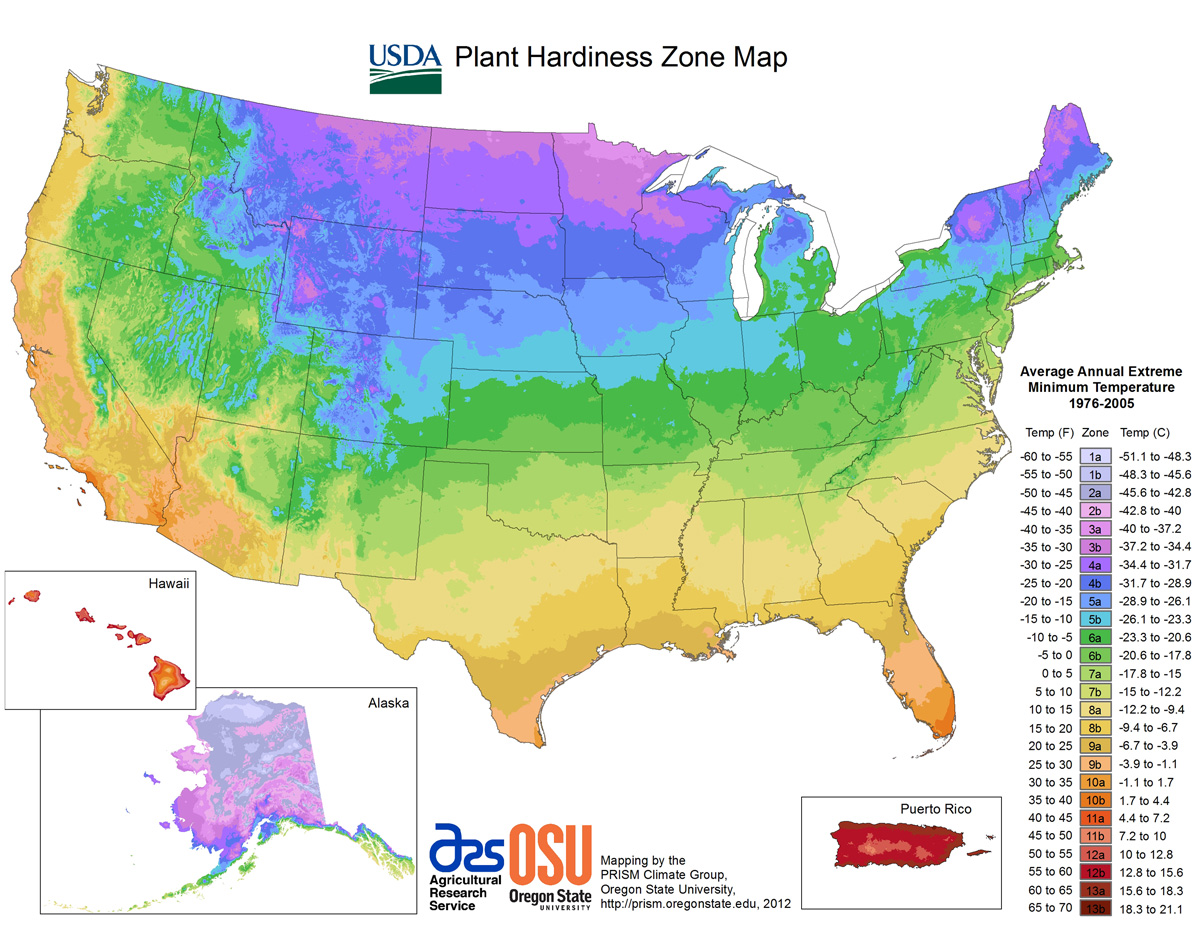
I refer often to this map when choosing trees and bushes I would like to plant. It has been fairly accurate. Some have had disappointing results when plants which are “OK” for their zone get killed by sub-zero temps or a hard frost.
The USDA sets those zones to help farmers and gardeners and people tasked with “we want … a shrubbery” take advantage of the average temperatures for the crops they wish to plant. As I said, it has been fairly accurate.
However, recently the USDA, likely under pressure from environmental groups, updated it to show that the United States has become (or will become) warmer overall. That would be fine if we (in this zone) had not just gone through last winter when billions of dollars worth of plants were killed by sub-zero temps in mid-Kentucky … those plants “should have” survived according to the OLD map, and definitely “will survive” according to the NEW map. However, they didn’t survive. There are dead boxwood shrubs, for example, everywhere you look.
A local nursery business owner said on an AM radio program this week, “Don’t believe the new map.” He has been in business for multiple decades and has seen that map change before. He said, the zones move north and/or south every once in a while, but it is fairly meaningless. What used to be safe to plant HERE are the same plants which work well HERE still. He is recommending that local folk should not believe the hype (partly because knowing the truth benefits his business in the long run … people aren’t disappointed that their plants die). You can’t grow bananas in Michigan. You can’t grow sugarcane in Kentucky. (Note: There is an ornamental variety that will grow and survive here…but it can’t be harvested for sugar).
The maps used to change based on local climate patterns, which sometimes resulted in higher average overall winter temperatures, and sometimes lower, from decade to decade. Has the winter gotten warmer in your zone? Not much likely. I’ve been joking for the last decade that NOW is the time to buy property in Michigan because it will soon be “the new Florida.” It isn’t. It won’t be in our lifetimes. I intend it as a “joke,” but it isn’t funny. To be funny it would have to have some connection to reality. Thus, it is merely sarcasm.
Likely the zoning map will be adjusted again in a few years, after the thousands you spent on those exciting tropical plants goes into the trash can at the first hard frost.
Yup! Plant what you want, but don’t trust the new zone map to determine the perfect plants. I see the local growers recommending plants which are native to this zone. Or, you choose plants which are recommended a half-zone up. It could save you a ton of heart-ache and losses to your wallet. In other words, using the map, choose plants which are recommended for the zone north of you.
According to that new zoning map I could plant a grass called bamboo here, but it would be an expensive bet. I’d be better off planting Dogwood or Serviceberry, both of which are native. Those plants don’t pay attention to the USDA maps and have always been hearty here. Maybe you shouldn’t pay attention either.
It is a good idea to talk to a local grower before buying that “perfect” $433 ornamental tree. That is the person I would trust. That person has a vested interest in making sure you buy something with which you will be happy. That’s the direction I will be going, too.
Other opinions are also common. In a NPR article from November 17, 2023 there is a quote from a Megan London…
“’I have been stating all year long, “This needs updating!,’ says Megan London, a gardening consultant in Hot Springs, Arkansas, in a video she posted on Facebook. London has been gardening for 26-years, and she’s seen her region warming. In the new map, London’s region in central Arkansas has moved from zone 7b to zone 8a. What that means for her is that she’s now considering growing kumquats, mandarin oranges, and shampoo ginger, a tropical plant.”
“But London says that the excitement she and other gardeners have to grow new things is tempered by another feeling: concern about human-caused climate change.”
Like I said, go ahead and plant what you want, but don’t complain when you have to throw a frost-killed plant in the trash can. The emerging weather pattern you’ve been observing can change back in one season. All you need is a forest fire in Canada to cool your area a couple degrees, but that would never happen, right? The question is how much are you willing to bet on climate change?
Plant once, plant well.
Copyright 2023 Donald Whelpley
[PLEASE NOTE that Don is always open to discussing the thoughts and opinions he shares here and welcomes comments as shared in the comment section. He doesn’t use other social media platforms and won’t see whatever you’d like to share with him if you post it elsewhere. ~ Sherry]

See more GUEST POSTS from Don!
Comments